
Chemoinformatics Services

Welcome to MolBAiozyme's

Chemoinformatics-Based Services.

At MolBAiozyme, we leverage the power of chemoinformatics to accelerate drug discovery and development. Our advanced computational techniques and analyses provide crucial insights into the chemical and biological properties of potential drug candidates, streamlining the path from discovery to development. Below are our comprehensive services, meticulously designed to meet the demanding needs of the pharmaceutical industry.

Chemoinformatics Services

Chemical Structure Database Management

Efficient management of chemical structure databases is fundamental for storing, retrieving, and analysing chemical data.

  • Chemical Structure Storage: Secure storage and management of chemical structures in relational databases.
  • Database Querying: Advanced querying capabilities to retrieve and manipulate chemical data.
  • Data Integration: Integrating chemical data with biological and pharmacological information for comprehensive analysis.

Chemoinformatics Services

Virtual Screening

Virtual screening helps identify potential drug candidates from large chemical libraries by predicting their biological activity.

Ligand-Based Screening:

Screening compounds based on their similarity to known active molecules.

Structure-Based Screening:

Utilizing the 3D structure of target proteins to identify potential ligands.

High-Throughput Screening:

Rapid screening of large compound libraries to identify promising candidates.

Chemoinformatics Services

Quantitative Structure-Activity Relationship (QSAR) Modelling

QSAR modelling predicts the biological activity of chemical compounds based on their chemical structure.
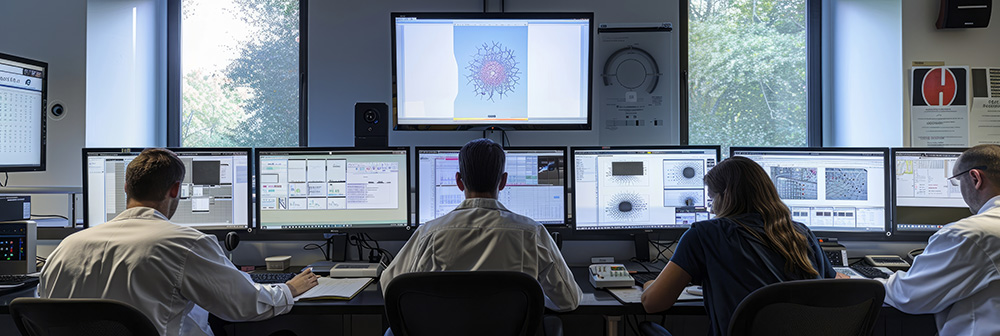
  • Model Development: Creating predictive models correlating chemical structures with biological activities.
  • Model Validation: Rigorous validation of QSAR models to ensure accuracy and reliability.
  • Activity Prediction: Using validated models to predict the activity of novel compounds.

Chemoinformatics Services

Molecular Docking Studies

Molecular docking predicts the preferred orientation of a molecule to a target protein, aiding in the understanding of drug-receptor interactions.

  • Docking Simulation: Simulating the binding of ligands to target proteins to predict binding modes.
  • Binding Affinity Calculation: Estimating the strength of binding between ligands and target proteins.
  • Interaction Analysis: Detailed analysis of ligand-protein interactions to identify key binding residues.

Chemoinformatics Services

Pharmacophore Modelling

Pharmacophore modelling identifies the spatial arrangement of features necessary for a molecule to interact with a specific biological target.

Pharmacophore Identification:

Determining the essential features required for biological activity.

Pharmacophore Screening:

Screening chemical libraries to identify compounds that match the pharmacophore model.

Hit Identification:

Identifying potential hits with desired biological activity based on pharmacophore models.

Chemoinformatics Services

ADMET Prediction

ADMET (Absorption, Distribution, Metabolism, Excretion, and Toxicity) prediction assesses the drug-like properties of compounds early in the discovery process.

Absorption Prediction:
Evaluating the likelihood of a compound being absorbed into the bloodstream.

Metabolic Stability:
Predicting how compounds are metabolized in the body and their potential for stability.

Toxicity Prediction:
Assessing the potential toxicity of compounds to ensure safety.

Chemoinformatics Services

De Novo Drug and chemical library design

De novo drug design involves designing new drug-like molecules from scratch based on desired biological activity and target structure. Designing chemical libraries to cover a broad chemical space and enhance the probability of finding active compounds.

  • Structure-Based Design: Designing novel compounds based on the 3D structure of target proteins.
  • Activity-Based Design: Creating new molecules based on desired biological activities and pharmacological profiles.
  • Diverse Library Creation: Generating libraries with diverse chemical structures to maximize hit rates.
  • Focused Library Design: Creating libraries focused on specific target classes or biological activities.
  • Library Optimization: Refining libraries based on screening results to enhance their effectiveness.

Molecular Dynamics Simulations

Molecular dynamics simulations provide insights into the dynamic behavior of drug-target complexes over time.

Simulation Setup:

Preparing and running simulations to study the stability and interactions of drug-target complexes.

Trajectory Analysis:

Analyzing simulation trajectories to understand conformational changes and interaction dynamics.

Binding Free Energy Calculation:

Estimating the free energy of binding to predict the stability of drug-target complexes.

Add Your Heading Text Here

dec