Biomacromolecules Based Services

Welcome to MolBAiozyme's

Biomacromolecules-Based Services.

At MolBAiozyme, we specialize in the analysis and characterization of interactions between proteins and various biomacromolecules, including lipids, carbohydrates, and nucleotides. These interactions are crucial for understanding cellular processes, signalling pathways, and metabolic functions. Our comprehensive services leverage advanced bioinformatics and computational techniques to provide detailed insights for research and industrial applications.

Biomacromolecules Based Services

Lipid-Protein Interaction Studies

Lipids play essential roles in cell membrane structure and function, and their interactions with proteins are critical for various biological processes.

  • Membrane Protein Analysis: Investigating the interaction of proteins with lipid bilayers to understand membrane protein functions.
  • Lipid Binding Sites Identification: Mapping and characterizing lipid binding sites on proteins to elucidate their roles in cellular signalling and metabolism.
  • Lipid-Protein Docking Studies: Predicting the binding modes and affinities of lipids to proteins to understand the specificity and dynamics of these interactions.

Biomacromolecules Based Services

Carbohydrate-Protein Interaction Studies

Glycoprotein Analysis:

Characterizing glycoproteins to understand the impact of glycosylation on protein function and stability.

Carbohydrate Binding Protein Studies:

Identifying and analysing proteins that specifically bind to carbohydrates, such as lectins.

Carbohydrate-Protein Docking:

Predicting the interaction between carbohydrates and proteins to study binding specificity and biological functions.

Biomacromolecules Based Services

Nucleotide-Protein Interaction Studies

Nucleotides, including DNA and RNA, interact with proteins in various processes such as replication, transcription, and translation.

  • DNA-Protein Binding Analysis: Studying the binding of proteins to DNA to understand gene regulation and chromatin structure.
  • RNA-Protein Interaction Studies: Investigating how proteins interact with RNA molecules to elucidate their roles in RNA processing and translation.
  • Nucleotide Binding Sites Identification: Mapping nucleotide binding sites on proteins to determine their roles in cellular processes.

Biomacromolecules Based Services

Structural Bioinformatics for Biomacromolecules

Advanced structural bioinformatics techniques provide deep insights into the 3D structures of biomacromolecule complexes.

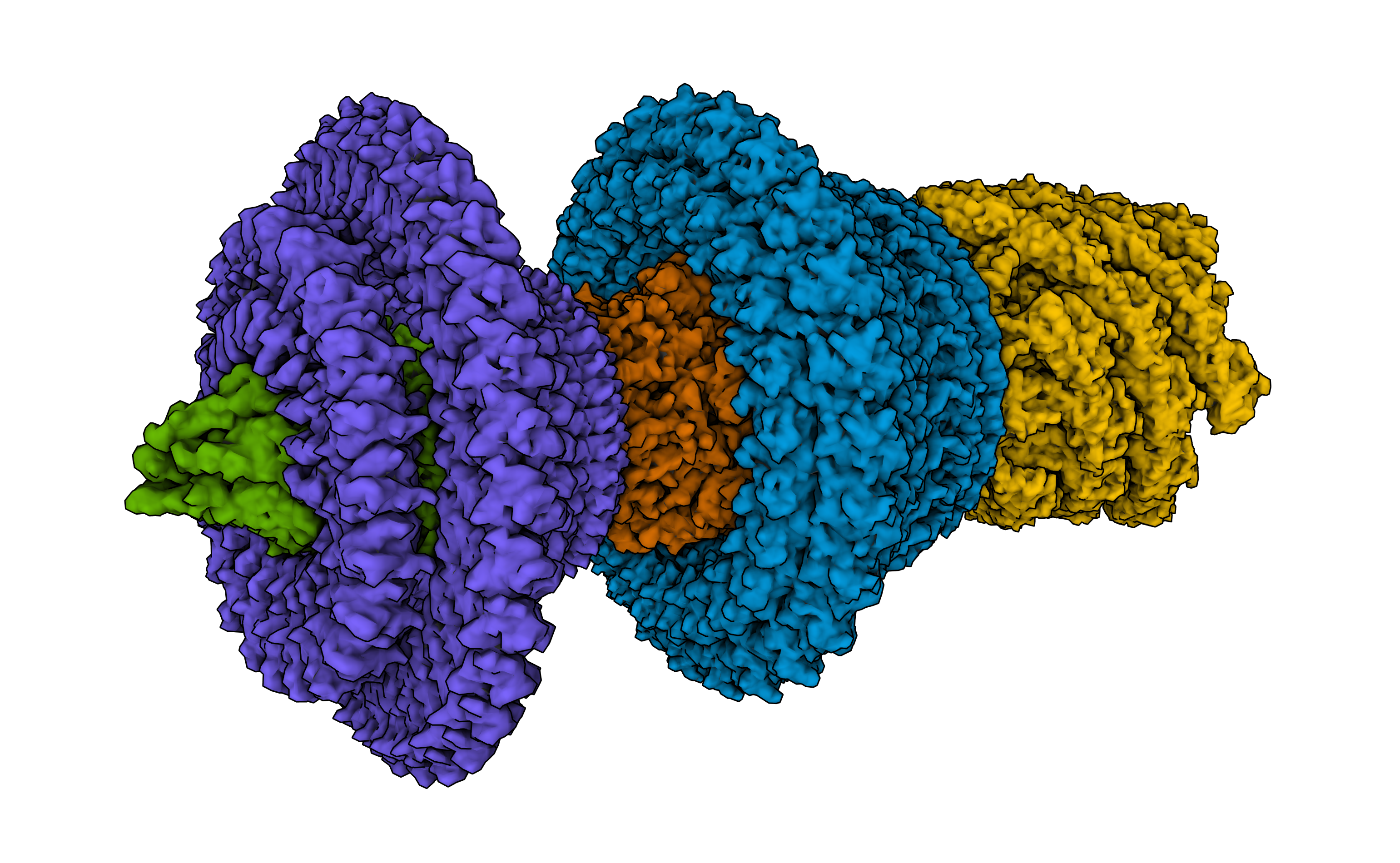
3D Structure Visualization

Creating detailed visual representations of protein-lipid, protein-carbohydrate, and protein-nucleotide complexes.

Comparative Structural Analysis:

Comparing structures across different species or conditions to identify conserved and variable regions.

Functional Annotation:

Linking structural features to functional annotations to elucidate biomacromolecule roles.
Biomacromolecules Based Services

MD Simulations, Binding Affinity and Thermodynamic Analysis

Simulating the dynamic behaviour of biomacromolecule complexes provides insights into their stability and interactions. Understanding the binding affinities and thermodynamic properties of biomacromolecule interactions is crucial for functional insights.

  • biomacromolecule-Protein Dynamics: Simulating the interactions between proteins and lipid bilayers to study membrane dynamics.
  • Binding Affinity Calculations: Quantifying the strength of interactions between proteins and biomacromolecules.
  • Thermodynamic Analysis: Analyzing the thermodynamic properties of binding, including enthalpy and entropy changes.
  • Free Energy Calculations: Estimating the free energy of binding to predict interaction stability.

Biomacromolecules Based Services

Systems Biology Approaches

Integrating biomacromolecule data into broader biological networks provides a holistic view of cellular processes.

Pathway Analysis:

Mapping proteins into biological pathways involving lipids, carbohydrates, and nucleotides.

Network Biology:

Constructing and analysing interaction networks to identify key regulatory nodes and modules.

Omics Data Integration:

Combining proteomics data with genomics, transcriptomics, and metabolomics to create comprehensive models of cellular systems.

Add Your Heading Text Here

dec